Impact Water - Arizona

Impact Water – Arizona advances community-driven solutions to the state’s most pressing water challenges. By connecting research, expertise, resources, and lived experience, the program turns knowledge into action that strengthens long-term water resilience.

Focusing on rural groundwater, Impact Water – Arizona works through place-based, co-designed engagement. The program brings together local leaders, residents, and experts in tailored workshops, equipping communities with research, tools, and guidance to support informed, locally grounded water solutions.

Team


Featured Projects

Agriculture & Water in the West: A Community Takes Charge

We are engaging agricultural communities in the Colorado River Basin to explore and address unique issues related to uncertain water supplies and demands and introducing concepts of Anticipatory Governance, including Exploratory Scenario Planning, as tools for decision-making under high uncertainty. This project is being led by ASU’s Decision Center for a Desert City in partnership with the Lincoln Institute of Land Policy - Babbitt Center for Land and Water Policy and Consortium for Scenario Planning. Watch the full length film here.


LABrary

A LABrary is a community-based resource center where you can “check out” scientific tools—just like borrowing books from a library. Equipment includes water quality meters, groundwater level sensors, microscopes, and lab kits. By making these tools accessible, LABraries expand opportunities for hands-on learning, STEM exploration, and local data collection. This project is led by Impact Water - Arizona in collaboration with the Arizona Department of Environmental Quality. Learn more. 

Arizona water chatbot logo

Arizona Water Chatbot

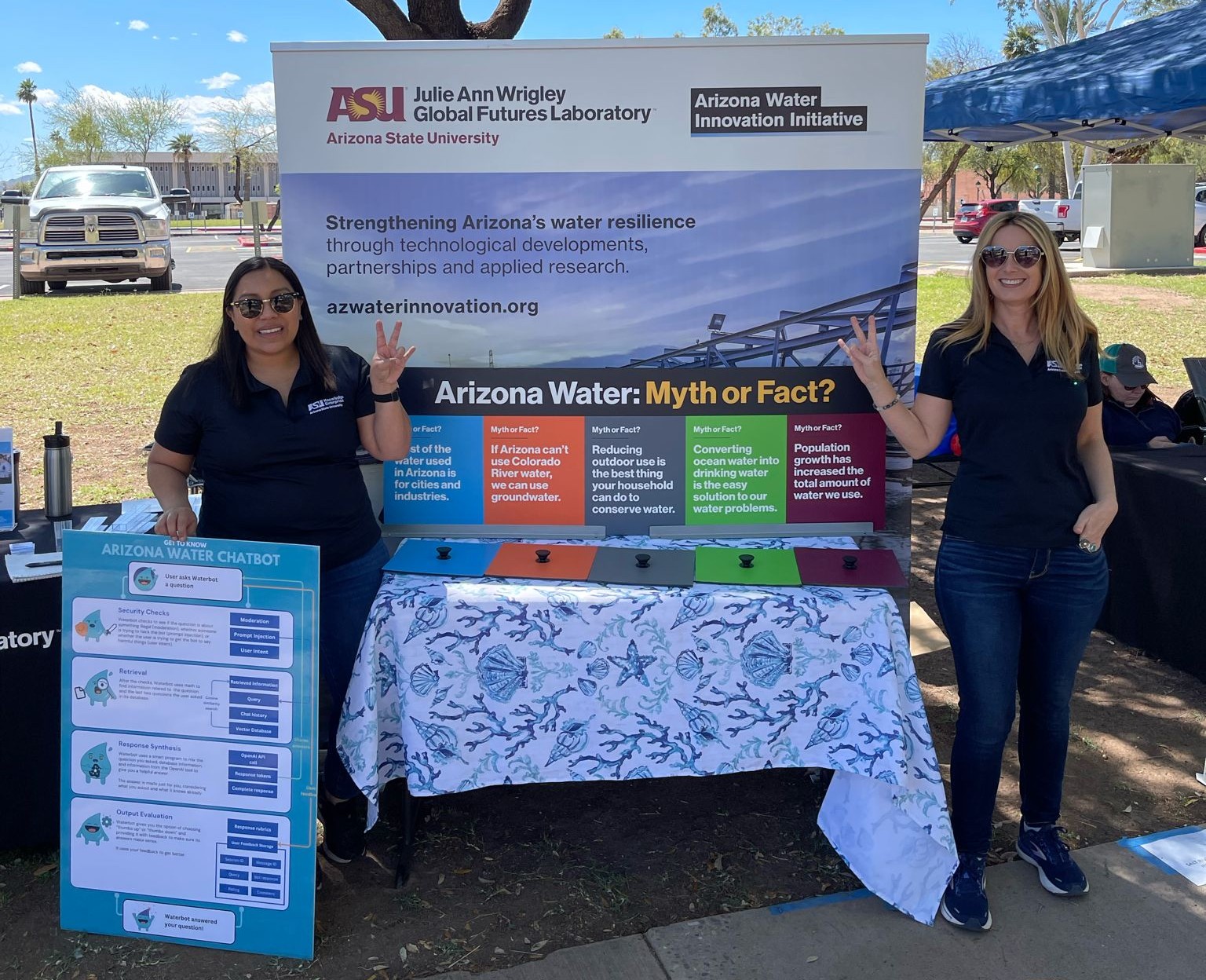
The Water Chatbot is enhancing access to reliable information on water-related topics, improving decision-making by providing quick and efficient responses to water-related inquiries as well as reducing the need for manual research and analysis. The collection of user-generated questions is in turn being compiled to inform further development of tools and messages. The project is led by ASU’s College of Integrative Sciences and Arts. Learn more