
Groundwater depletion is worsening worldwide
- LA Times
“The fact that groundwater depletion has been accelerating in such a large number of food-producing regions underscores the critical links between food and water security, and that both are at far greater risk around the world than most people realize,” said Jay Famiglietti.

Protecting the Earth’s Groundwater
- Tufts University
“Not only are things getting worse, but in some places the pace of decline is accelerating—and that includes California and Arizona,” Jay Famiglietti says. “We’ve been kicking the can down the road for a long time.”
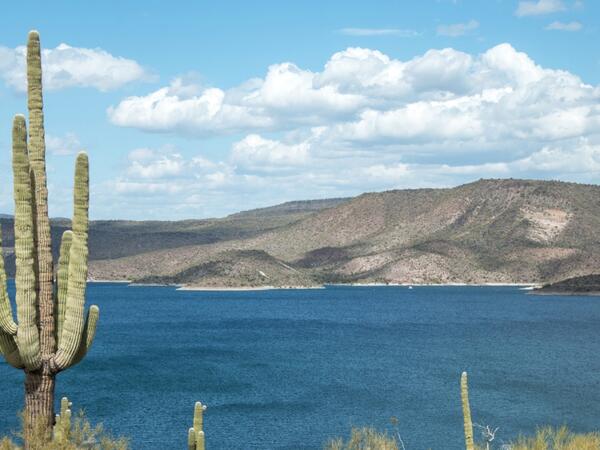
Don’t Flee the American Southwest Just Yet
- New York Times
Paradoxically enough, the steady march of master-planned communities to the horizon — an Arizona cliché — provides big hydrological savings because of the conversion of water-guzzling farmland into more parsimonious suburban uses, Sarah Porter, the director of the Kyl Center for Water Policy at Arizona State University, told me.
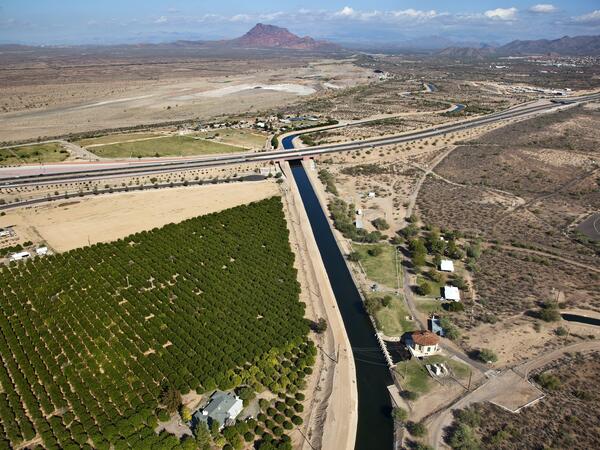
Whispers of Arizona groundwater regulations spur surges of deeper, higher-capacity wells
- Tucson Sentinel
The department’s interpretation of current law doesn’t let the agency consider projected water use to halt new irrigation in an area, which further limits its ability to establish regulatory areas, according to Sarah Porter, Director of the Kyl Center for Water Policy.

US experiencing climate change now, latest National Climate Assessment shows
- ASU News
"As shown in the Fifth National Climate Assessment, the Southwest — including Arizona — is taking action on climate change,” said Dave White, director of the Global Institute of Sustainability and Innovation at ASU, as well as lead author of the NCA5 chapter on the Southwest region.

No place in the US is safe from the climate crisis, but a new report shows where it’s most severe
- CNN
Drought and less snowpack are huge threats to Southwest communities in particular. The report’s Southwest chapter, led by Arizona State University climate scientist Dave White, found the region was significantly drier from 1991 to 2020 than the three decades before.

'We can't be complacent:' Climate report offers mix of familiar warnings, new solutions
- Arizona Republic
“The climate impacts are rapidly accelerating, even in the last five years since the 2018 report," Dave White said. "Throughout the chapter, we present the connections between all of these different issues and identify ways in which science has progressed in our understanding of how water, food, agriculture, fire and human health are interconnected, which helps to inform adaptations."
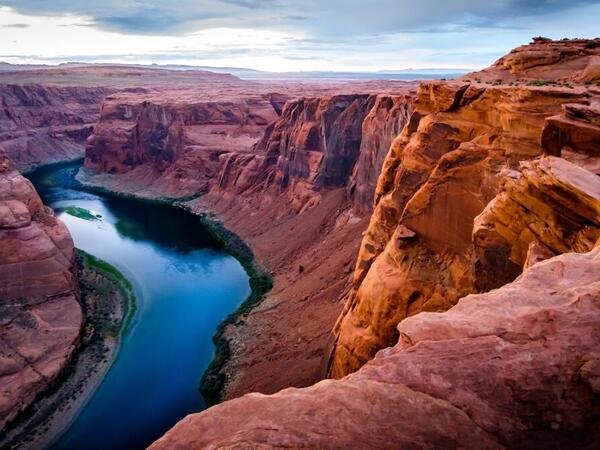
The Historic Claims That Put a Few California Farming Families First in Line for Colorado River Water
- ProPublica
Jay Famiglietti, an Arizona State University hydrologist who studies global water supplies, says large-scale farming in southwestern deserts like the Imperial Valley is “not sustainable, it just can’t go on.” Ultimately, production may need to shift to wetter regions.
Mapping our water reserves for the future
- ASU News
For more than a quarter-century, ASU Professor Jay Famiglietti and his research team have been working on a satellite system that he says can track groundwater supply changes and depletion from space via the NASA GRACE mission.

ASU water expert Amber Wutich named a 2023 MacArthur Fellow
- ASU News
Wutich also serves on the strategy team for the Arizona Water Innovation Initiative, a state-funded initiative aimed at protecting Arizona’s water security for future generations. She directs the Water for All program within the initiative, which aims to use engineering and social infrastructure to improve water security for vulnerable households and ensure communities that are politically excluded from water access and decision-making can participate in future-focused discussions that impact them most.